
Low or High Setting? The Engagement Ring Choice You Notice Every Day
Setting height is often overlooked when browsing photos online, but it shapes how an engagement ring feels every day on an ordinary Tuesday.
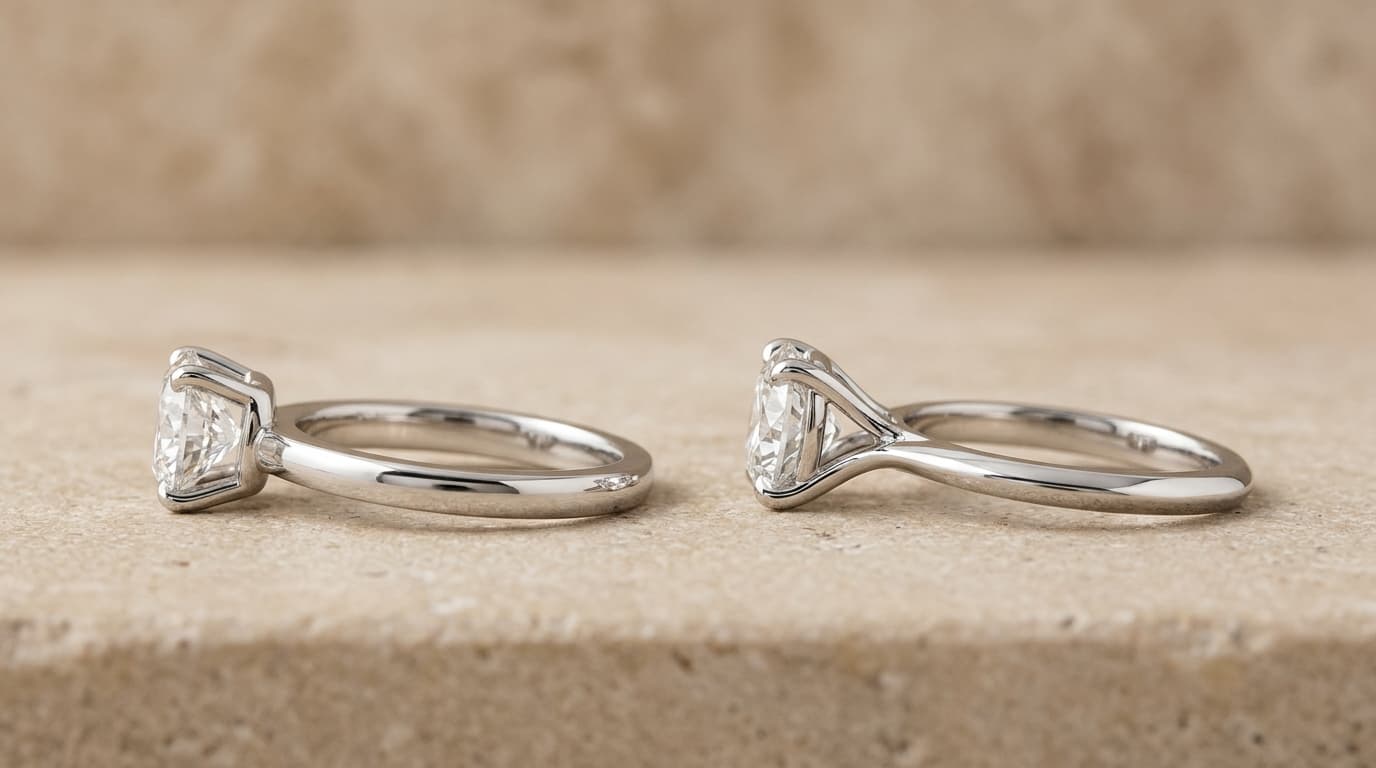
The center stone gets most of the attention before an engagement ring is chosen. Setting height often becomes noticeable later: when the ring slips beneath a sleeve, brushes against a pocket, catches the eye from across a table, or sits beside a wedding band.
It is a small design decision with a surprisingly large presence in everyday life. A low-profile setting keeps the center stone close to the finger. A high-profile setting lifts it prominently above the band. The difference is easiest to see from the side, but it affects far more than the side view.
The quiet appeal of a lower setting
There is something composed about a ring that sits close to the hand. The design feels compact and settled, as though the stone and band were conceived as one continuous form. For someone who prefers subtle jewelry or works frequently with their hands, that closeness feels natural. Sleeves and gloves may move over it more easily, depending on the design, and the ring's beauty comes from outline and proportion rather than vertical height.
The presence of a higher setting
A higher setting gives the center stone a sense of lift and prominence. More of the stone and the basket architecture beneath it are visible, especially when the hand moves. Cathedral shoulders often create this effect by rising toward the center in graceful arches. Height can make a ring more present in daily movement, which means the decision should include the life around the ring, not only the static photo of it.
Design Observation: Low Profile vs. Raised Cathedral
Designs like Eternal Devotion keep the stone nestled close to the finger flanked by tapered baguette shoulders, offering an understated low profile. In contrast, cathedral and halo settings like the Hot and Cold Engagement Ring elevate the head above a split shank, showcasing light beneath the setting.
Think about an ordinary Tuesday
Instead of imagining only the proposal or wedding day, picture the ring during an unremarkable week. Do you wear gloves at work? Do you spend the day typing, lifting, gardening, or exercising? Do you remove jewelry for certain activities? Do you love a ring that announces itself, or one that stays visually close to the hand?
These questions are not meant to eliminate the style you love. They help explain what you will enjoy about living with it. Lifestyle informs taste—it does not replace it.
Sources and further reading
Consult GIA insights on ring durability, settings, and practical questions your jeweler will ask:
Compare Profiles
See how different settings meet the hand
Browse solitaire and halo engagement ring designs in 3D to evaluate profile heights, basket proportions, and side silhouettes.
Related articles
Keep exploring the ideas, workflows, and growth tactics connected to this topic.
Why the Side View of an Engagement Ring Deserves More Attention
Most engagement rings are introduced from above, but the side view is where a design reveals its true personality, structural balance, and craft.
Should Your Wedding Band Sit Flush? There Is More Than One Beautiful Answer
Flush fit is a classic choice, but intentional gaps, contoured curves, and mixed metals create equally stunning ring stacks. Here is how to choose what fits your style.
The Quiet Details That Make an Engagement Ring Feel Like Yours
Two rings with the same style label can feel completely different. Subtle transitions, negative space, and gentle tapers define true jewelry character.