
Why the Side View of an Engagement Ring Deserves More Attention
Most engagement rings are introduced from above, but the side view is where a design reveals its true personality, structural balance, and craft.
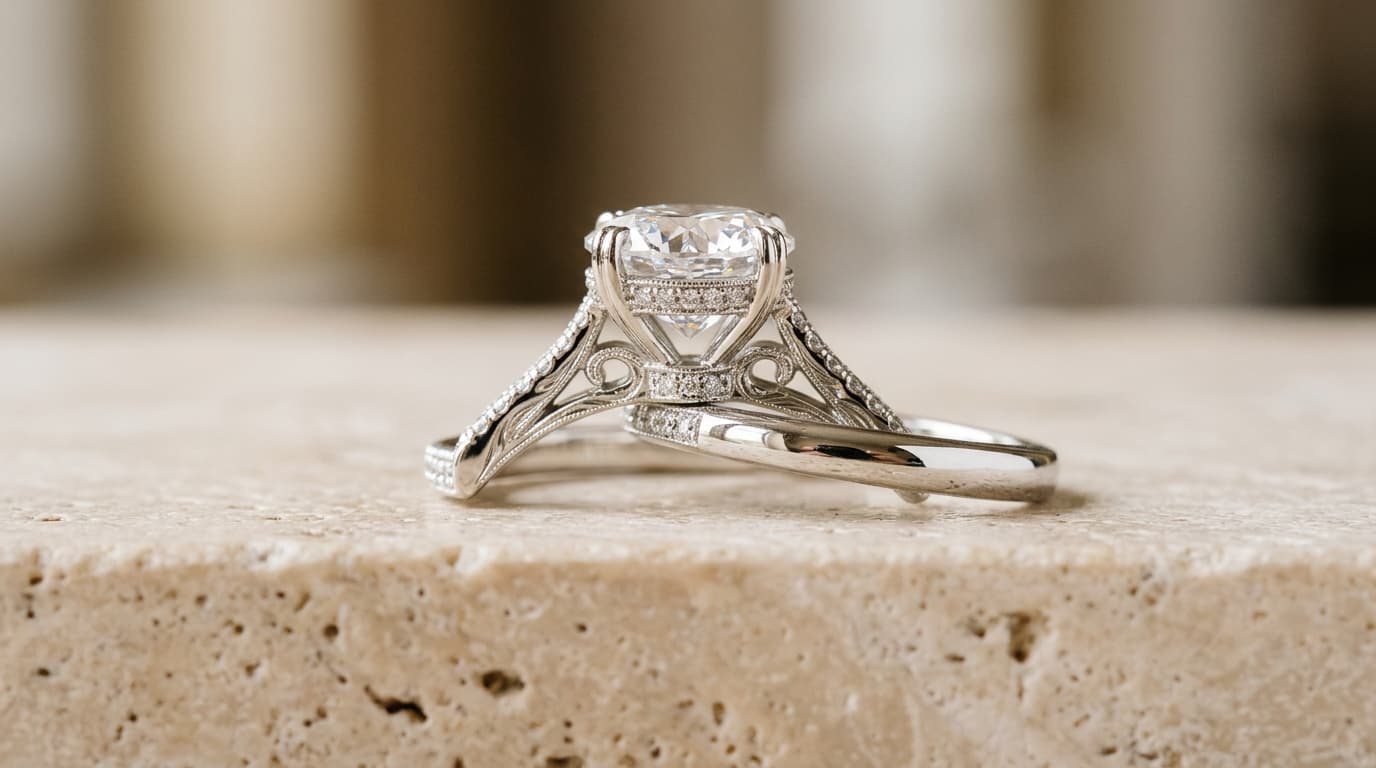
Most engagement rings are introduced from above. It is the familiar view: a center stone, a band, perhaps a halo or a line of pavé. It tells you the broad idea quickly, which is why it appears in storefronts, saved posts, and nearly every first screenshot.
But a ring does not live as a flat image. It turns with the hand, catches the light from different directions, and reveals itself in small moments. The side view is often where a design stops looking like a category and starts feeling like a particular ring.
There is a second design beneath the center stone
Turn a ring to the side and an entirely different composition appears. Some settings are clean and open, leaving generous space beneath the center stone. Others form a compact, protective basket around the gem. Cathedral shoulders rise in soft arches, while nature-inspired designs may reveal petals, leaves, or crossed vines that are barely visible from above.
These details are easy to miss in a conventional product photograph. A simple solitaire is a good example: from above, two solitaire rings can appear almost identical. From the side, one may feel light and minimal while the other feels architectural and sculptural. The center stone has not changed—the character around it has.
Design Observation: Basket Architecture
Observe how settings cradle the center gem. On designs like the Arora Engagement Ring, four prongs lift the stone above sparkling double pavé shoulders. In more intricate settings like the Double Hearts or Floral Pavé Cluster, the under-gallery incorporates sculptural metalwork that only reveals its full rhythm when rotated in 3D.
Setting height shapes daily life
Profile height is not purely aesthetic; it is structural and functional. A stone set high above the shank receives light generously and feels dramatic in motion. But height also changes how a ring interacts with pockets, knitwear, and daily movement. A lower setting hugs the finger comfortably and reduces the risk of catching on textiles.
How the wedding band will sit
The bridge—the metal connecting the two sides of the shank beneath the center setting—determines whether a wedding band can slide flush against the engagement ring. If the basket flares outward near the finger, a straight band will leave a natural gap. Understanding this clearance early prevents surprises when choosing a wedding band later.
Sources and further reading
To dive deeper into diamond setting anatomy, prongs, and bezel integrity, explore educational guides from the Gemological Institute of America:
Explore Ring Architecture
See rings from every profile angle
Inspect settings, basket heights, and bridge details in 3D across our curated design collection.
Related articles
Keep exploring the ideas, workflows, and growth tactics connected to this topic.
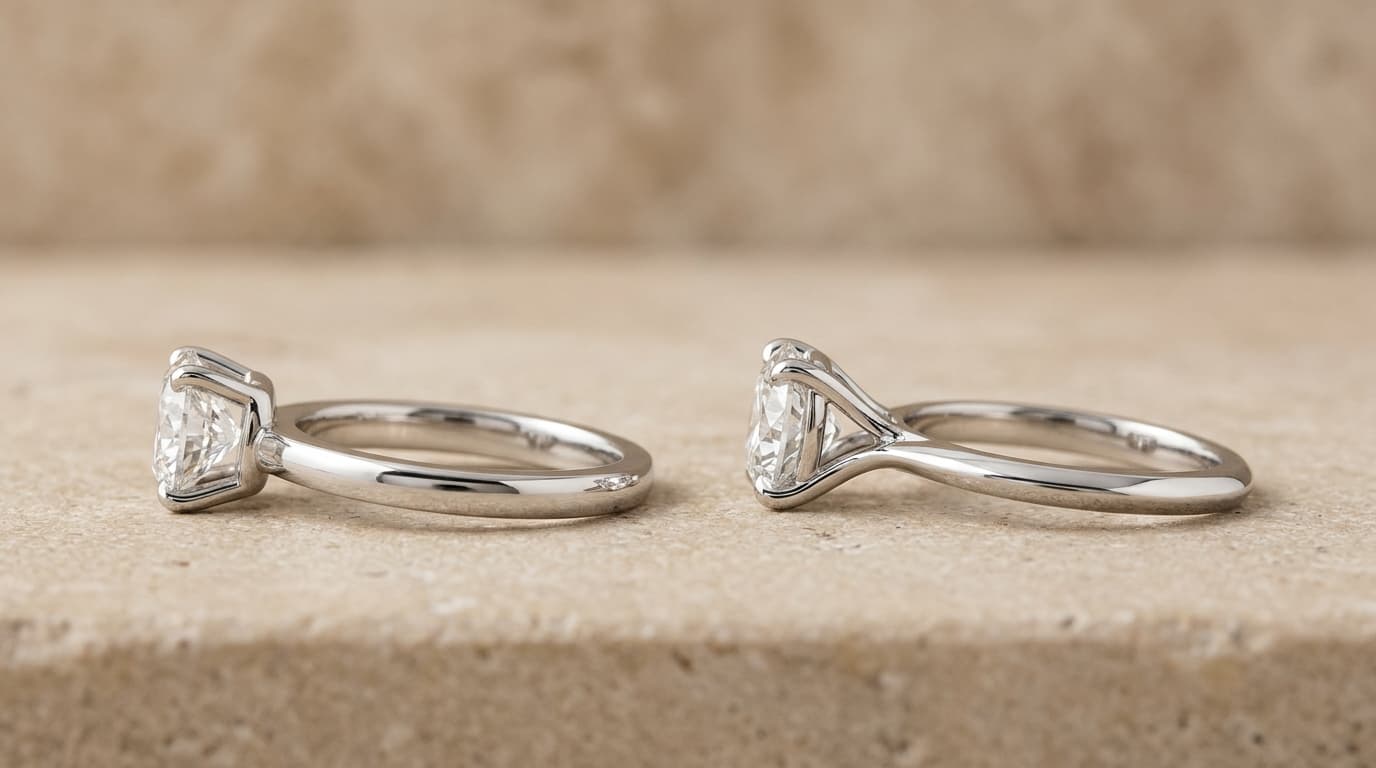
Low or High Setting? The Engagement Ring Choice You Notice Every Day
Setting height is often overlooked when browsing photos online, but it shapes how an engagement ring feels every day on an ordinary Tuesday.
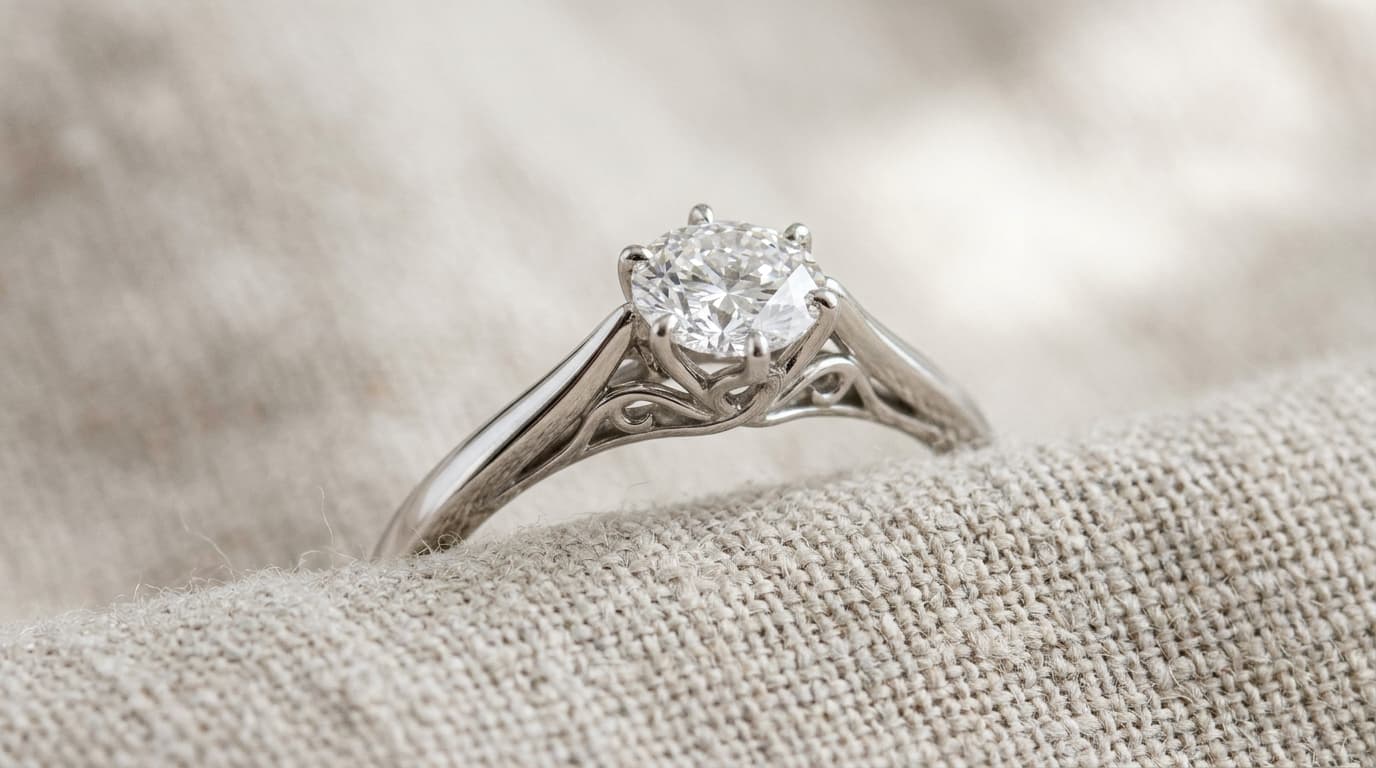
The Quiet Details That Make an Engagement Ring Feel Like Yours
Two rings with the same style label can feel completely different. Subtle transitions, negative space, and gentle tapers define true jewelry character.
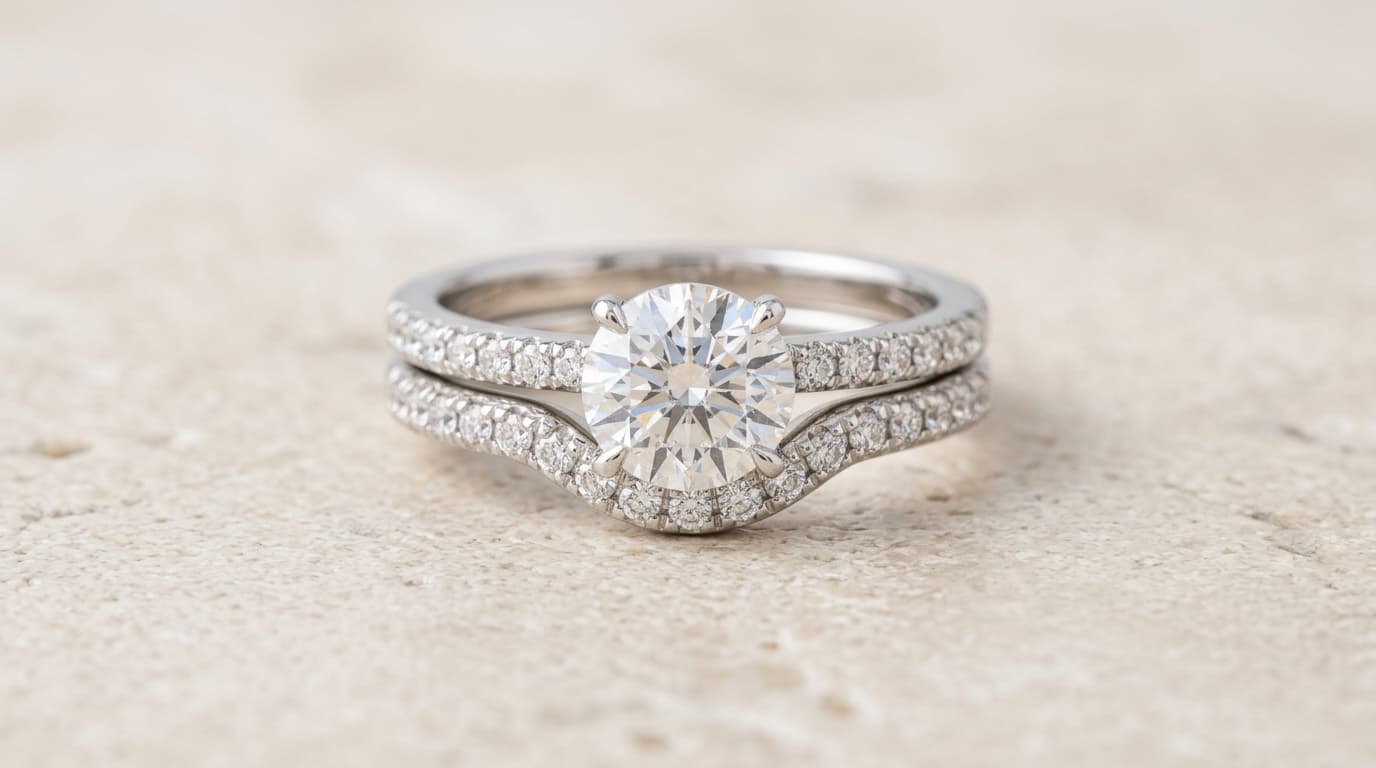
Should Your Wedding Band Sit Flush? There Is More Than One Beautiful Answer
Flush fit is a classic choice, but intentional gaps, contoured curves, and mixed metals create equally stunning ring stacks. Here is how to choose what fits your style.