
Should Your Wedding Band Sit Flush? There Is More Than One Beautiful Answer
Flush fit is a classic choice, but intentional gaps, contoured curves, and mixed metals create equally stunning ring stacks. Here is how to choose what fits your style.
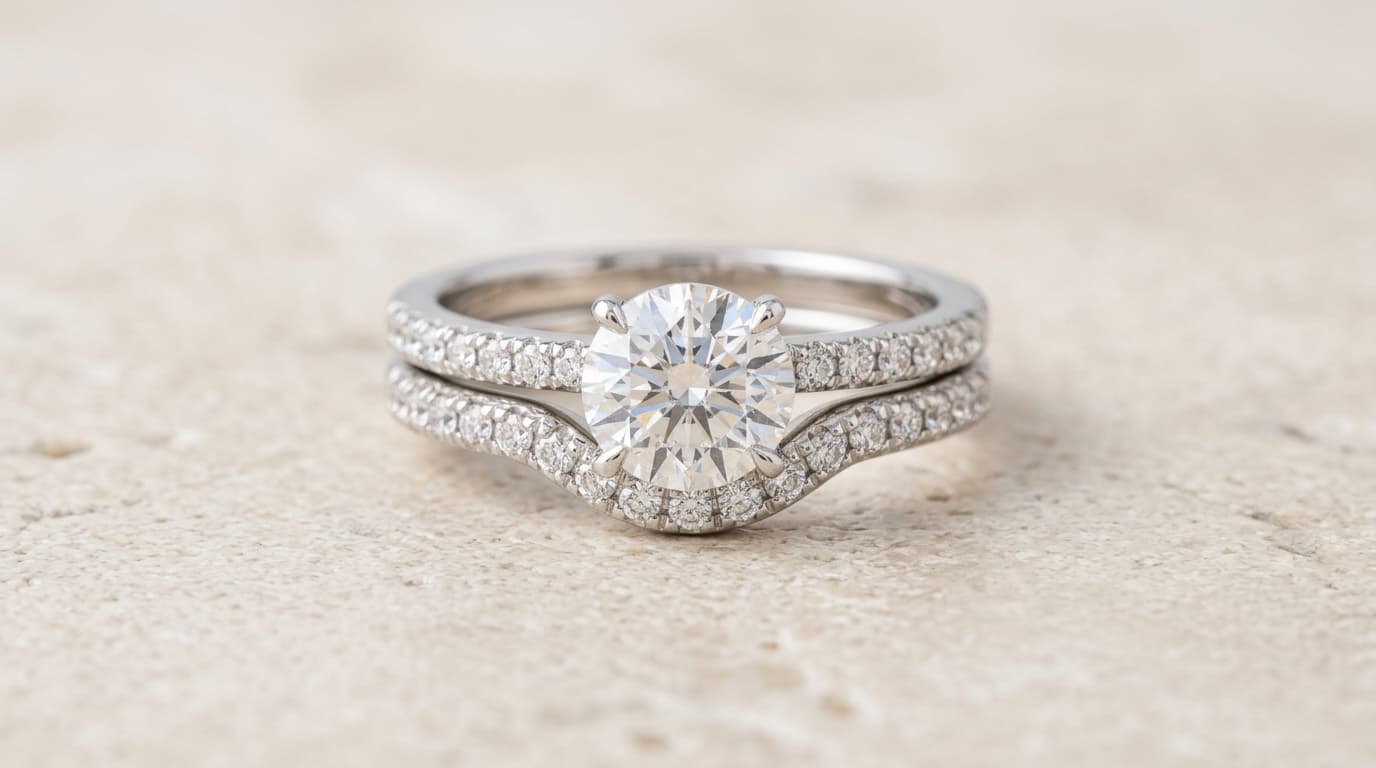
There is a satisfying neatness to an engagement ring and wedding band sitting perfectly together. The lines align, the gap disappears, and the two rings seem to form a single continuous piece. It is easy to assume that this is how every pair must look.
Yet some of the most distinctive ring stacks leave space between the bands. Others use a contoured curve that becomes visible only when the engagement ring is removed. Flush is one beautiful answer—it is not the only one.
What creates the gap?
The space between two rings is easiest to understand from the side. A basket may extend beyond the engagement ring's band. A halo may sit low around the center stone. Shoulders may widen near the head. Any of these details can meet a straight wedding band before the two shanks can sit flush. This does not mean the engagement ring was poorly designed—the feature creating the gap is often what gives the ring its character.
Design Observation: Stacking & Band Relationships
Halo settings like the Round Floral Cluster Halo expand horizontally around the stone—when styling them, inspect the halo overhang to decide whether to pair with a contoured band or embrace an intentional gap with a straight band. Pairing a solitaire with the Timeless Grace Diamond Band or Imperial Continuum demonstrates how band diamond coverage impacts the overall stack.
A gap can feel light and intentional
A narrow line of skin between two rings separates their silhouettes and allows each piece to be appreciated individually. On a delicate stack, that negative space makes the composition feel lighter. With contrasting metals—such as a yellow gold band against a white gold solitaire—it emphasizes that the two rings commemorate distinct moments in your life.
Contoured and curved wedding bands
A contoured wedding band hugs the exact outline of the engagement ring setting. It brings the two rings close together without altering the engagement head. When considering a curved band, think about how it will look when worn alone on days you leave the engagement ring at home. A softer curve may provide the ideal balance between stack harmony and standalone grace.
Sources and further reading
Read GIA's guide on wedding band pairings and stacking considerations:
Explore Stacking Styles
Discover rings made to stack or stand alone
Browse engagement rings and diamond wedding bands in 3D to explore profile heights and complementary pairings.
Related articles
Keep exploring the ideas, workflows, and growth tactics connected to this topic.
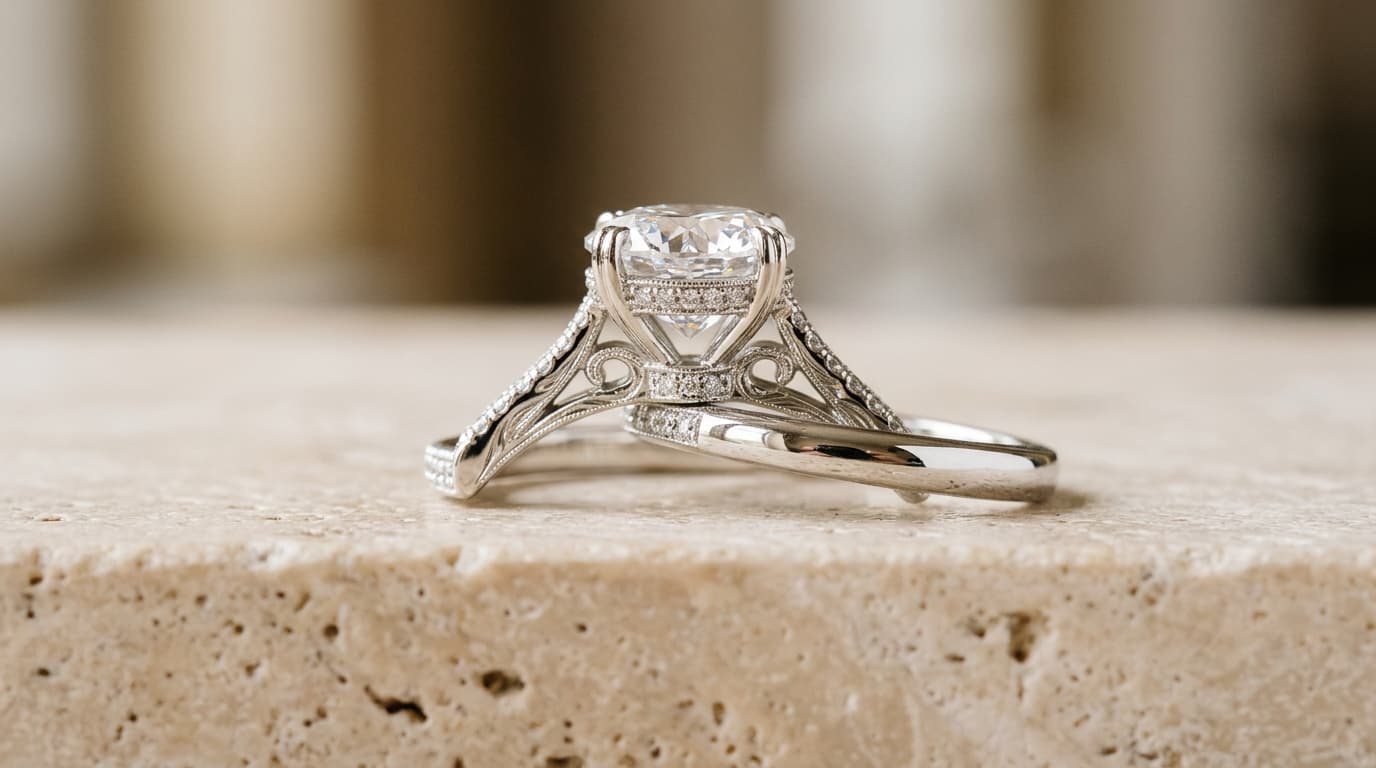
Why the Side View of an Engagement Ring Deserves More Attention
Most engagement rings are introduced from above, but the side view is where a design reveals its true personality, structural balance, and craft.
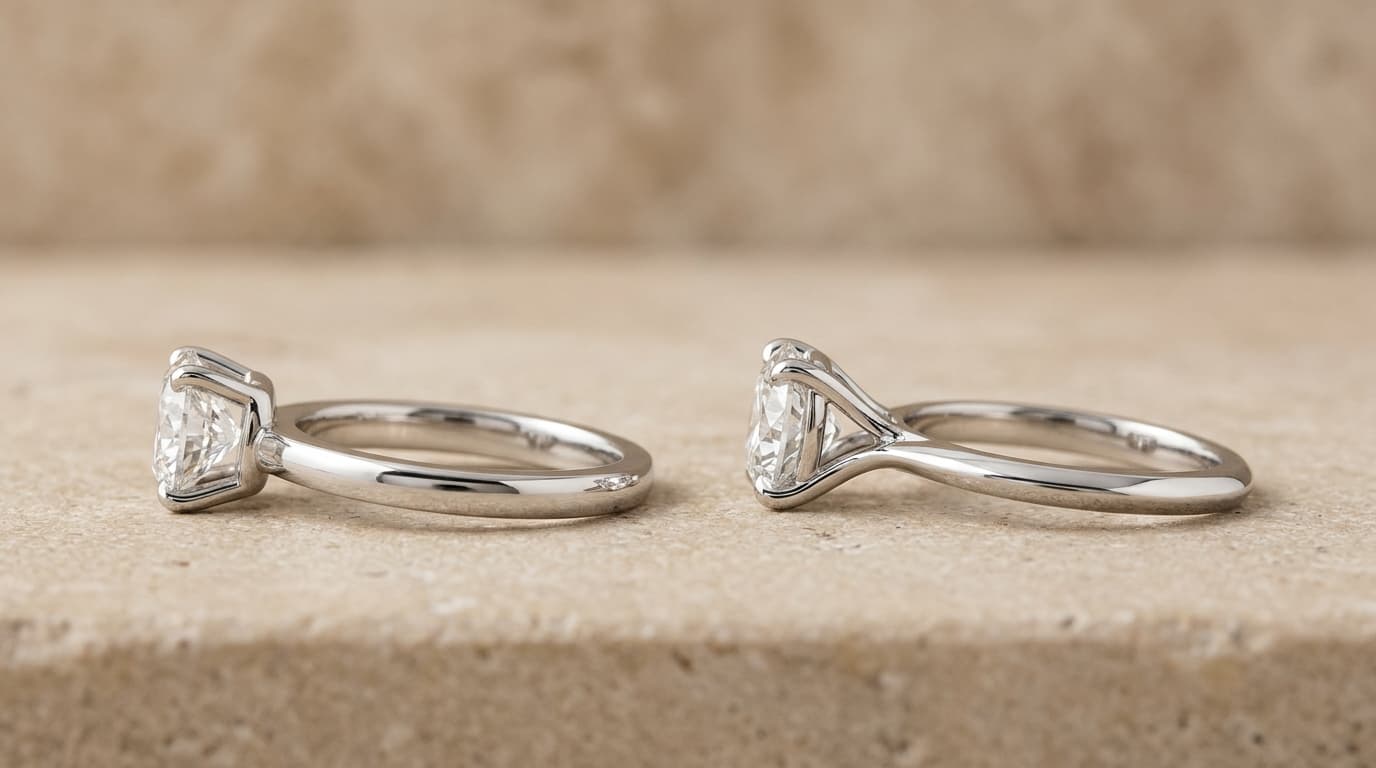
Low or High Setting? The Engagement Ring Choice You Notice Every Day
Setting height is often overlooked when browsing photos online, but it shapes how an engagement ring feels every day on an ordinary Tuesday.
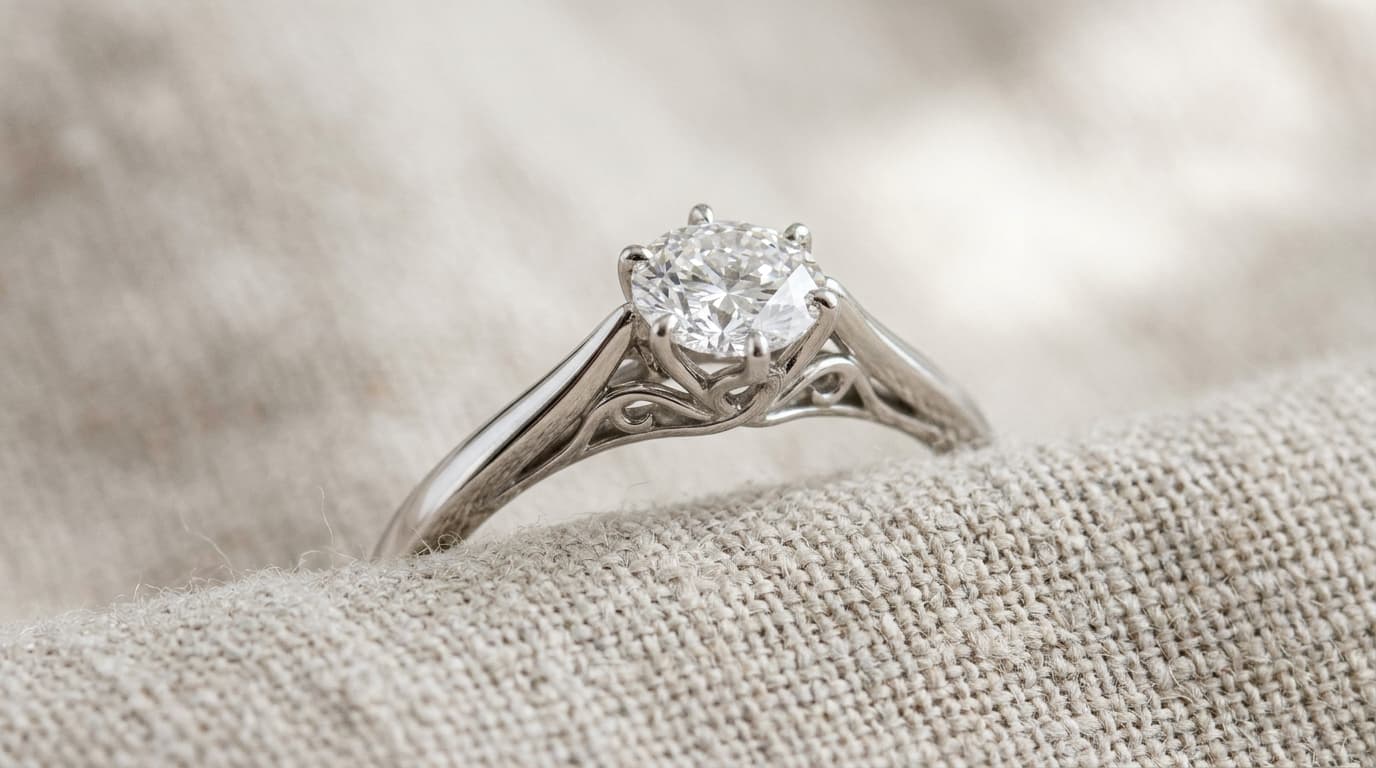
The Quiet Details That Make an Engagement Ring Feel Like Yours
Two rings with the same style label can feel completely different. Subtle transitions, negative space, and gentle tapers define true jewelry character.